


 Back
Back


- Back
- Infection Control
Shop Our Top Infection Control Products






- Back
- Pharmaceuticals









- Back
- Offers and Promotions


For UK dental professionals, recognising and managing tooth wear early is critical not only for patient comfort and aesthetics but also for long-term oral health outcomes.
Recent national data shows that 71% of dentate adults in the UK have some degree of tooth wear, with 22% experiencing moderate wear and around 5% severe wear affecting significant portions of the tooth surface (UK Adult Oral Health Survey 2023).
This means that most dentists will regularly encounter patients presenting with tooth erosion, dental abrasion, attrition erosion or worn enamel.
Why tooth wear matters for your patients
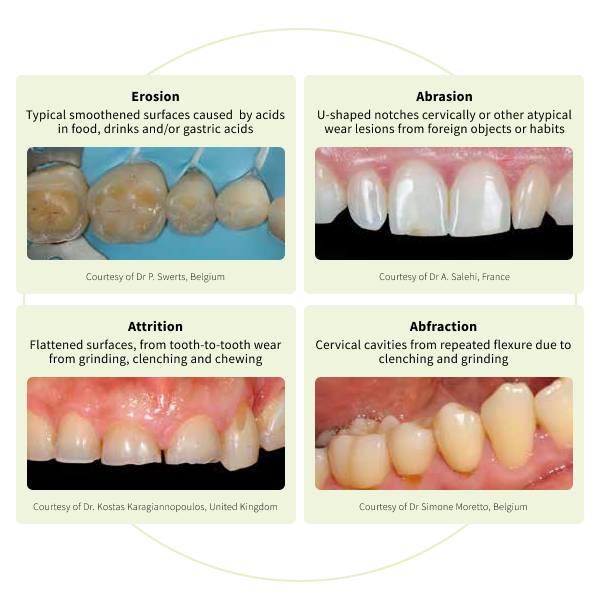
Tooth wear is multifactorial and often progressive. It can result from a combination of:
- Acid erosion enamel loss from dietary acids, reflux or lifestyle factors
- Attrition erosion from bruxism or parafunctional habits
- Dental abrasion from mechanical forces such as aggressive brushing
- Combined biological and mechanical stresses on tooth surfaces
For patients, untreated tooth wear can lead to:
- Tooth sensitivity and discomfort
- Compromised aesthetics and shortened clinical crowns
- Reduced occlusal stability
- Increased need for complex teeth restoration procedures later in life
Early intervention and minimally invasive repair strategies are therefore essential.
Diagnosing tooth wear in practice
Early recognition is key. Clinicians should look for common indicators such as:
- Smooth, flattened occlusal surfaces
- Cupping of dentine on posterior teeth
- Thinning or translucency of incisal edges
- Progressive worn enamel and loss of vertical dimension
Modern solutions for tooth wear restorations
As tooth wear cases increase, the demand for restorative materials that combine strength, aesthetics and minimally invasive placement grows.
Innovations from GC Dental offer restorative approaches designed specifically for managing grinded teeth repair and erosive tooth wear while preserving remaining tooth structure.
We recommend the following products:
G-Premio BOND - Quick bonding procedure and cost-efficient dispensing with 300 drops per bottle. Ideal to block hypersensitivity caused by wear
everX Flow - Strengthening teeth in case of heavy occlusal loading. Very high fracture resistance to inhibit shock effects caused by bruxism
G-ænial A’CHORD - Long-lasting gloss, preserving your aesthetics even longer for your freehand or stamp technique. The true-to-nature fluorescence ensures that your wear solution is invisible under any light
G-ænial Universal Injectable - Superior wear resistance, making it an ideal composite to treat wear with. Self-polishing ability for long term gloss and reduced wear of antagonist
-
Predictable restorations
Fibre-reinforced materials can enhance fracture resistance in compromised teeth. -
Minimally invasive treatment
Preserves remaining enamel and dentine. -
Efficient workflows
Direct restorations can often be completed chairside. -
Long-term patient value
Helps prevent escalation to complex prosthodontic rehabilitation.